
How do our courses work?
From zero to flying solo. Step by step, at your own pace, built on the Total Control Method.
The Total Control Method
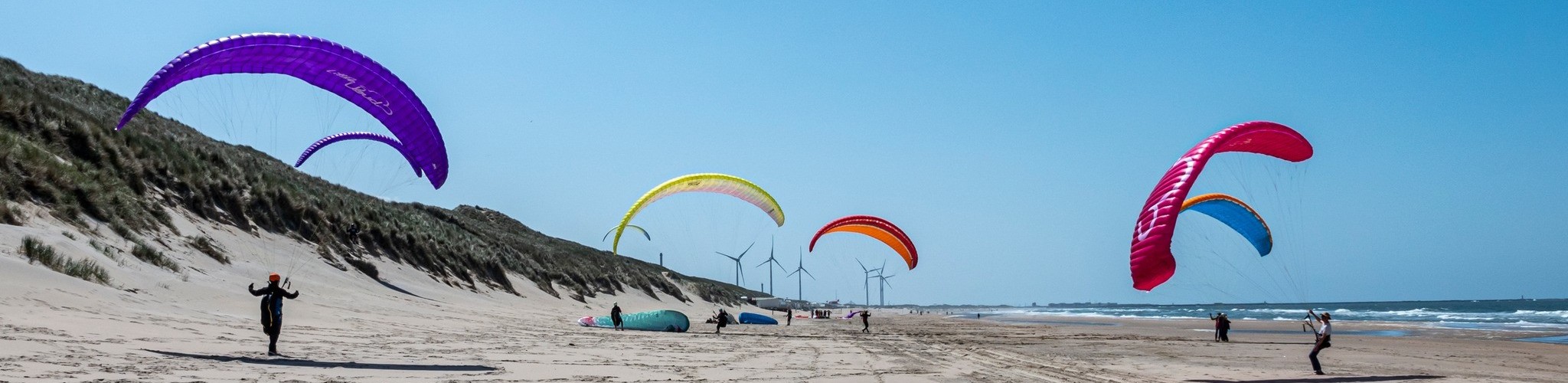
Wing control and technique are at the heart of everything we do. By training in dynamic conditions you learn to truly understand the wind and your wing. The muscle memory you build forms the foundation of every flight.
The patience method
The most common mistake is reacting too aggressively to the wing. Our method starts at the foundation: observing what happens when you do nothing. You feel how the wing behaves naturally. Then you add deliberate input from there.
Understand, don't just do
You don't just learn the technique, you learn the why behind it. We let you consciously experience what happens when things go wrong, so the right reflexes become hardwired into your system.
3-hour training blocks
Quality over quantity. We train in blocks of 3 hours, because experience tells us that concentration drops off after that. Short and focused keeps your learning curve at its steepest.
Progressively more challenging
Once you have the wing dialled in stable conditions, we take it a step further. We seek out action, train your reaction speed and deliberately practice in turbulence.
Why two phases?
You don't learn to fly in a single day, and that's not the goal. Our courses are built in two phases, because we believe a good pilot must understand their equipment before they ever leave the ground. Phase 1 is about technique and control. Phase 2 is about independence and responsibility.
The goal of our courses
We don't train pilots who stay dependent on an instructor. Our goal is for you to leave as an independent pilot: one who makes safe decisions, reads conditions accurately, and keeps improving at the dune long after the course is over.
Phase 1: Direct guidance
In Phase 1 you're never on your own. Your instructor is always nearby, correcting in real time and explaining why. You learn by doing, feeling and understanding, until the wing becomes an extension of yourself.
Phase 2: Building independence
In Phase 2 responsibility gradually shifts to you. You start making your own decisions about when to fly, how to launch and how to handle the conditions. The instructor is still there, but more as a coach than a guide.
Wing Mastery
The foundation every pilot needs. Before you fly, you master the wing completely.
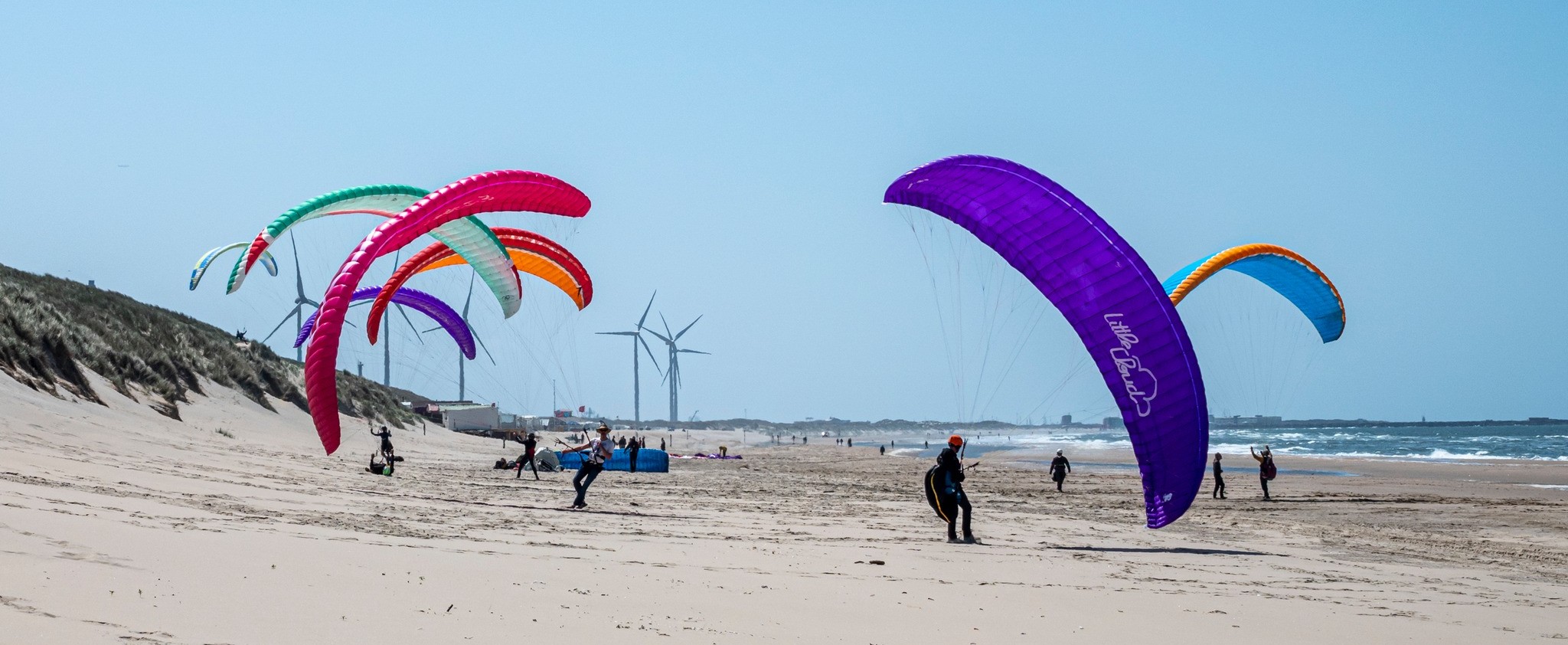
Phase 1 is all about building a real connection with your wing on the ground. We don't rush to the dunes. We train until groundhandling is a reflex: automatic, confident and effortless.
Groundhandling & wing control
Launching, steering and feeling the wing in all wind conditions. Muscle memory is the goal. No thinking, just doing.
Reading the wind
Understand how wind behaves on the beach and dunes. Know when to launch and when to wait.
Strong wind management
Calmly launching and laying down the wing in powerful wind. Safety in all conditions.
Theory & safety
Weather basics, equipment knowledge and safety protocols: the foundation of smart, safe flying.
First dune climbs
Once your control is solid, you take your first steps up the dune, wing overhead and ready to fly.
Launch techniques
Different launch techniques for varying wind speeds and directions, including the 5-point safety check.
Pilot Mastery
From the ground to the sky. Your transition to full independence.
Phase 2 is where you truly become a pilot. The focus shifts from the ground to the air. You build real airtime, learn to make your own decisions and grow into a confident, self-sufficient member of the flying community.
Soaring the dunes
Your first real flights, staying up longer and feeling the lift.
Independent weather decisions
Learn to read forecasts and decide for yourself when and where it's safe to fly. Go / No-Go.
Refining flight technique
Landing precision, turn control and building confidence through guided airtime sessions.
Active flying
Maintaining the right pressure in your wing at all times: recognising, preventing and recovering from collapses.
Part of the community
Fly alongside experienced pilots. You don't learn alone. You become part of the crew on the beach.
Your own equipment
In Phase 2 we encourage you to explore and test your own gear. We help you find the right equipment for your style and goals.
Who comes when?
Not every day is the same. One day is perfect for getting airborne; another is ideal for ground training. That's why we assess conditions every day and decide who benefits most from coming out. That way we get the maximum out of every session for everyone.
Phase 1: more usable days
Groundhandling doesn't require perfect flying conditions. As long as there's enough wind on the beach and the wind isn't coming from behind the dune, you can train. That means Phase 1 students have far more usable days. Your focus is on the ground, and that opportunity is almost always there.
Phase 2: priority on flyable days
On genuinely good flying days, Phase 2 students get priority. Those days are scarce and precious for building airtime. As a Phase 2 student you track the weather yourself and choose your own sessions. You no longer need to come on non-flyable days. You're always welcome of course.
A little patience on the best days
When a perfect flying day rolls around, priority goes to Phase 2, as they need those conditions most. For Phase 1 students this means occasionally waiting on a top day, and we appreciate your understanding. Don't worry: your ground training days are plentiful, and the right moment to come always comes around again. This way everyone gets the right training at the right time.
Good to know
Where do we teach?
Our home base is Wijk aan Zee. Depending on wind and weather we head to spots like Haarlem, Nieuwegein or Zeeland, always chasing the best conditions of the day.
When do we teach?
Year-round, in wind speeds between 10 and 40 km/h and dry weather. Final confirmation comes a few days in advance via our student group chat.
Equipment
We provide everything: helmets, paragliders or parakites (10–27 m²), miniwings, lightweight harnesses and kite risers. Bringing your own gear? No problem.
What to wear
Dress in layers: base layer + windproof jacket. The beach can catch you off guard. In summer: don't forget sunscreen!
Preparation
Groundhandling is more physically demanding than it looks. Arrive rested and bring enough food and water to keep your energy up during breaks.
Student group chat
All announcements, locations and times are shared via our dedicated group chat. You'll always be in the right place at the right time.
The task list
Throughout the course we use structured task lists. Before you fly the dune solo, you work towards a complete checklist covering wing control and theory. The list gives shape to your progress. Together with your instructor you work through every item until you've fully mastered it in light, moderate and strong wind.
Wing control task list includes:
- Reverse and forward launch in all wind conditions
- Controlling kite position and moving it with purpose
- Simulating emergency situations
- Cobra launch, recovering the wing from inverted
Theory core topics include:
- Rules & etiquette, regulations & airspace
- Terrain & aerodynamics, equipment knowledge
- Meteorology & Go/No-Go decision making
- Safety, emergency procedures & risk management
Your Flight Confidence Guarantee
Our courses are unlimited, and that's unique. After 30 years of experience on the beach, we know that an unlimited package simply works best for everyone. No stress about expiring lesson packs or time limits: the course runs until you've mastered flying and weather reading well enough that you no longer need us.
Unlimited lessons, until you're truly ready
Unlimited
No lesson pack, no time limit, no pressure. You come for as long as you need, until you've fully mastered flying and weather reading and can head out independently.
Room for muscle memory
Soaring is largely about repetition and feel. How quickly that muscle memory forms is different for everyone. Whether you need a little more time to translate knowledge into action or simply want extra sessions to refine your technique: you get that space here.
Safety first
We don't send you into the air until you're genuinely ready. An unlimited course is the only way to take that principle seriously, for everyone, without exception.
Ready to get started?
Browse our course options and sign up directly. All equipment, instruction and theory are included.